
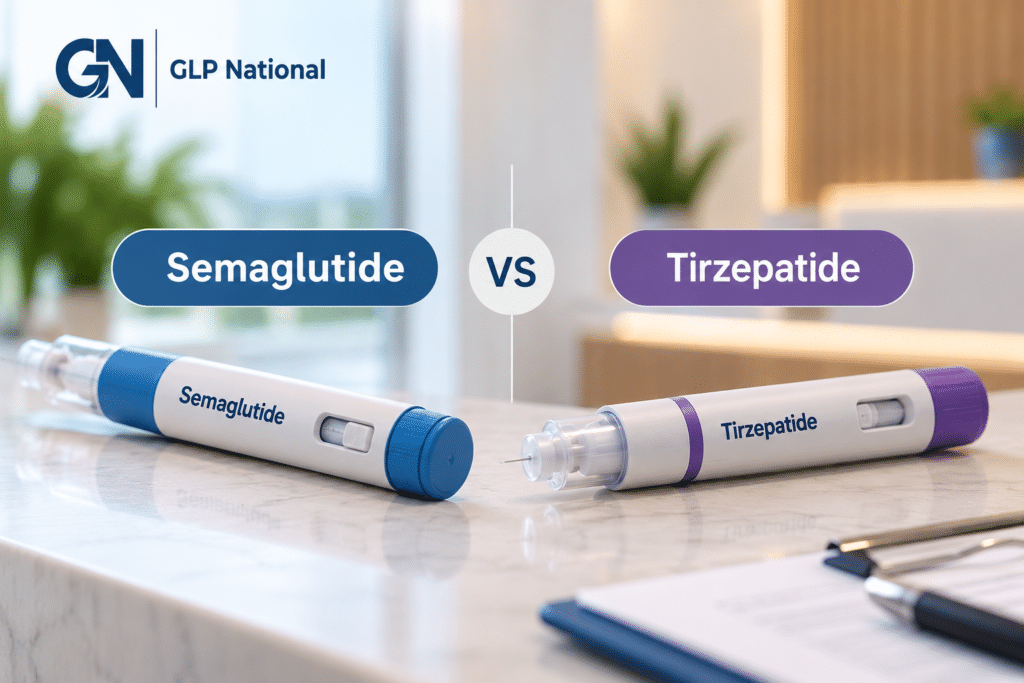
Compare semaglutide vs. tirzepatide for weight loss, including how each medication works, potential results, side effects, and eligibility considerations. Miami patients can explore personalized medical weight-management options with GLP National by completing the online intake form.
Choosing a medical weight-loss treatment can feel overwhelming, especially when semaglutide and tirzepatide are two options you are considering. Both medications can help eligible patients manage their weight, but they work differently and may produce different results depending on individual health factors.
For people in Miami, Florida, understanding these differences is an important first step toward making an informed decision. GLP National helps individuals explore medical weight-management options and learn about treatment possibilities through a personalized healthcare evaluation.
What Is the Difference Between Semaglutide and Tirzepatide?
Semaglutide and tirzepatide are prescription medications used for specific medical conditions, including chronic weight management in eligible patients.
Semaglutide works by activating the glucagon-like peptide-1 (GLP-1) receptor. This hormone pathway helps regulate appetite, food intake, and blood sugar levels. When prescribed for weight management, semaglutide may help reduce hunger and support weight loss alongside healthy eating and physical activity.
Tirzepatide activates two hormone receptors: GLP-1 and glucose-dependent insulinotropic polypeptide (GIP). These pathways influence appetite regulation, food intake, and metabolic processes.
Although both medications can support weight management, their mechanisms of action differ. Neither treatment is suitable for everyone. A healthcare provider can review your medical history, current medications, and personal goals to determine which option may be appropriate.
Which Medication Produces Better Weight-Loss Results?
One of the most common questions people ask is whether semaglutide or tirzepatide produces greater weight loss.
Clinical research has demonstrated meaningful weight loss with both medications when used alongside lifestyle changes. However, results vary based on factors such as treatment duration, prescribed dosage, individual response, and overall health.
A 72-week clinical trial published in The New England Journal of Medicine in 2025 compared tirzepatide with semaglutide in adults with obesity or overweight and at least one weight-related medical condition. Participants receiving tirzepatide experienced greater average weight loss than those receiving semaglutide at the doses studied.
These findings can help patients understand the available evidence, but they do not guarantee that one medication will work better for every individual.
Your healthcare provider can help you evaluate the potential benefits of each treatment based on your circumstances, medical needs, and weight-management goals.
Semaglutide vs. Tirzepatide: Five Important Differences
Before deciding which treatment to explore, consider these five factors.
1. How Each Medication Works
Semaglutide targets the GLP-1 receptor, while tirzepatide targets both GLP-1 and GIP receptors. These differences affect how the medications influence appetite regulation and metabolic processes.
Your provider can explain how each mechanism may relate to your treatment goals.
2. Potential Weight-Loss Results
Both medications can help eligible patients manage their weight. Research comparing the two has shown greater average weight loss with tirzepatide at the doses studied.
However, individual results can differ considerably. Your starting weight, treatment adherence, lifestyle habits, and medical history may influence your progress.
3. Administration and Treatment Schedule
The injectable formulations commonly used for chronic weight management are generally administered once weekly according to their prescribing instructions.
Your healthcare provider should explain the correct administration schedule, dose progression, storage requirements, and follow-up arrangements for your prescribed medication.
Never change your dose or combine these medications without medical guidance.
4. Treatment Costs and Availability
The cost of semaglutide and tirzepatide can vary depending on the prescribed product, pharmacy, insurance coverage, dosage, and treatment program.
Before starting treatment, ask about the total cost, consultation fees, medication supply, and any additional charges.
You should also clarify which specific medication and formulation are being offered. Compounded medications are not the same as commercially manufactured products, and their quality, safety, and regulatory considerations differ.
5. Your Individual Health Needs
Your medical history is an essential part of choosing a treatment. Existing health conditions, current medications, previous treatment experiences, and potential contraindications may influence which option is appropriate.
The best treatment is not necessarily the one with the highest average weight-loss result in a clinical study. It is the option a qualified healthcare provider determines is appropriate for your individual needs.
What Are the Potential Side Effects?
Understanding possible side effects is an important part of making an informed treatment decision.
Both semaglutide and tirzepatide can cause gastrointestinal symptoms, including:
- Nausea
- Vomiting
- Diarrhea
- Constipation
- Abdominal discomfort
These symptoms may occur when starting treatment or increasing the dose. Some people experience mild symptoms, while others may find the effects more difficult to tolerate.
More serious risks can include pancreatitis, gallbladder problems, and kidney complications related to dehydration. Both medications also carry a boxed warning concerning thyroid C-cell tumors and should not be used by people with a personal or family history of medullary thyroid carcinoma or by people with multiple endocrine neoplasia syndrome type 2.
Your healthcare provider should review relevant warnings, precautions, and possible medication interactions before treatment begins.
Seek prompt medical attention if you experience severe or persistent symptoms.
Who May Qualify for Medical Weight-Loss Treatment?
Eligibility depends on the specific medication, its approved indications, and your individual medical circumstances.
Prescription weight-management medications may be considered for certain adults with obesity or for adults who are overweight and have at least one weight-related health condition.
During an evaluation, a healthcare provider may consider:
- Your current weight and overall health
- Existing medical conditions
- Previous weight-management attempts
- Current medications and potential interactions
- Personal treatment goals
- Relevant contraindications and safety concerns
A healthcare professional must determine whether treatment is appropriate. Completing an online form or expressing interest in a medication does not guarantee eligibility or a prescription.
How GLP National Helps Miami Patients Explore Their Options
If you are considering semaglutide or tirzepatide in Miami, Florida, GLP National provides an online intake process to help individuals begin exploring medical weight-management options.
The process starts with understanding your needs rather than assuming that the same medication is right for everyone.
Step 1: Complete the Online Intake Form
Share relevant health information, current medications, and your weight-management goals through the online intake form. Provide accurate information so your circumstances can be properly reviewed.
Complete the GLP National Intake Form
Step 2: Discuss Your Options With a Healthcare Provider
A qualified healthcare provider can review your information, discuss potential benefits and risks, and determine whether further evaluation or treatment may be appropriate.
Step 3: Understand Your Personalized Treatment Plan
If a medication is prescribed, make sure you understand the dosage instructions, possible side effects, follow-up requirements, and total treatment costs.
This process helps you make a more informed decision about your weight-management options.
Frequently Asked Questions
Is tirzepatide better than semaglutide for weight loss?
A clinical trial found greater average weight loss with tirzepatide than semaglutide at the doses studied. However, individual responses differ, and a healthcare provider should consider your medical history and treatment goals before recommending either medication.
Can I switch from semaglutide to tirzepatide?
A healthcare provider may consider switching medications in certain circumstances. The decision should account for your current dose, treatment response, side effects, and medical history. Do not switch or combine medications without professional guidance.
Can I explore medical weight-loss treatment in Miami?
Yes. You can begin by completing GLP National online intake form. Your information can then be reviewed as part of the process for exploring appropriate treatment options.
Do I need lifestyle changes while taking these medications?
Yes. Medical weight management generally involves a reduced-calorie eating plan, regular physical activity, and other healthy habits appropriate to your circumstances. Medication is not a substitute for a comprehensive approach to weight management.
Take the Next Step Toward Your Weight-Management Goals
Semaglutide and tirzepatide offer different approaches to prescription-based weight management. Understanding their mechanisms, potential results, side effects, and eligibility requirements can help you prepare for a productive conversation with a healthcare professional.
If you live in Miami, FL, and want to explore your options, start by sharing your health information with GLP National.
Complete Your Online Intake Form
Take the first step toward discussing a weight-management approach that considers your individual needs and health goals.
Medical disclaimer: This article is for educational purposes only and does not constitute medical advice. Treatment decisions require evaluation by a qualified healthcare professional. Eligibility, medication availability, potential side effects, and results vary by individual.