
Losing weight is not always as simple eating less & exercising more. For many people, appetite, hunger, metabolism, blood sugar, & other factor can make weight management difficult.
This is where GLP-1 medical weight loss may be considered. GLP-1 medications used part of medically supervised weight management programs to help with appetite control & support healthier eating habits.
But what exactly is GLP-1 medical weight loss, and how does it work?
Let’s take a closer look.
What Is GLP-1 Medical Weight Loss?
GLP-1 medical weight loss is treatment approach uses medications act on GLP-1-related pathways in the body to support weight management.
GLP-1 stands for glucagon-like peptide-1, hormone that naturally occurs in body. It plays role in appetite, digestion, blood sugar regulation.
GLP-1 medications work by interacting with these pathways. Depending on medication, they may help people feel full for longer, reduce hunger, and make it easier to manage food intake.
These medications are generally used as part of a broader treatment plan. A healthcare provider can evaluate your health history, weight-management goals, and other factors before determining whether a GLP-1 medication is appropriate.
How Does GLP-1 Medical Weight Loss Work?
GLP-1 medications can affect several processes involved in hunger and digestion.
1. They Can Help Control Appetite
One of the main reasons people consider GLP-1 treatment is appetite management.
GLP-1 medications can influence signals involved in hunger and fullness. This may help some people feel satisfied with less food and experience fewer hunger cravings throughout the day.
Better appetite control can make it easier to follow a balanced eating plan over time.
2. They Can Slow Digestion
GLP-1 medications can slow the movement of food through the stomach.
Because food may remain in the stomach longer, some people may feel full for a longer period after eating. This can help reduce the desire to eat between meals or consume larger portions.
The effect on digestion is also one reason some people may experience temporary digestive symptoms when beginning treatment.
3. They Support Blood Sugar Regulation
GLP-1 plays a role in how the body responds to food and blood sugar changes.
GLP-1 medications can support glucose-dependent insulin release and help regulate blood sugar levels. Their effects on blood sugar are one part of the way these medications work in the body.
Your healthcare provider can determine whether a particular medication fits your health needs.
Which GLP-1 Medications Are Used for Weight Management?
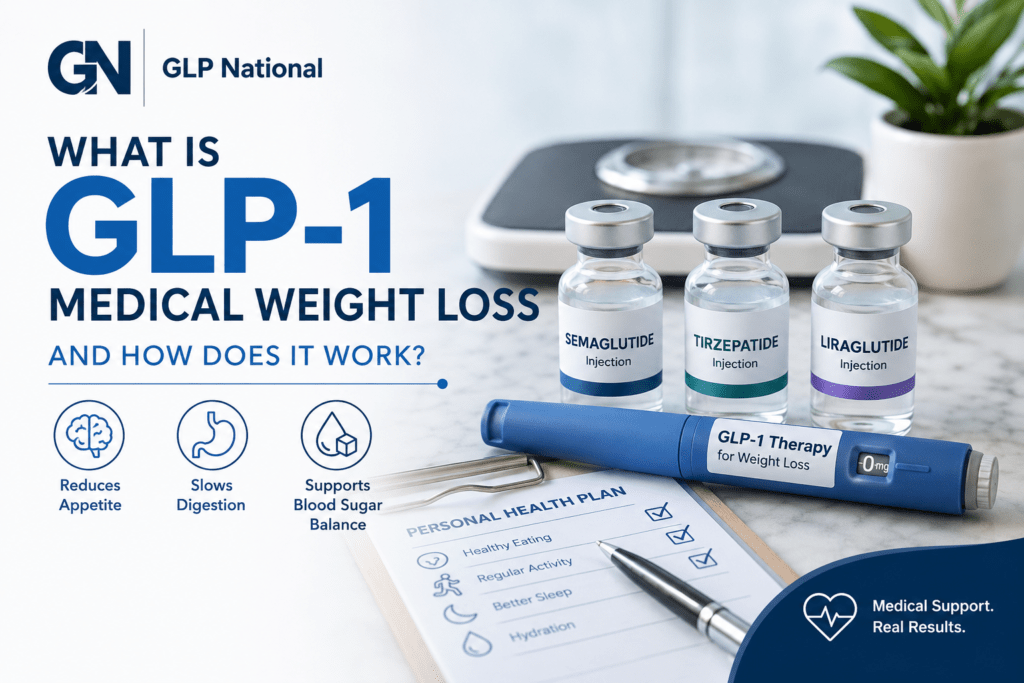
Several medications work through GLP-1-related pathways. At GLP National, the treatment options featured include Semaglutide, Tirzepatide, and Liraglutide.
Each medication works somewhat differently and has its own dosing schedule.
Semaglutide
Semaglutide works on the GLP-1 receptor and is commonly used as a once-weekly injection in weight-management treatment plans.
It can help with appetite control and may help people feel satisfied for longer after eating.
Tirzepatide
Tirzepatide works on two hormone pathways: GLP-1 and GIP.
This dual-action approach affects appetite, digestion, and other metabolic processes. Tirzepatide is commonly administered once weekly as part of a prescribed treatment plan.
Liraglutide
Liraglutide works on the GLP-1 receptor and is administered daily.
Its shorter dosing interval may be suitable for some treatment plans. As with other medications, a healthcare provider determines whether it is appropriate for the individual.
Is GLP-1 Medical Weight Loss Just About Taking Medication?
No. Medication is only one part of a medical weight-management approach.
Healthy habits can play an important role alongside treatment. Depending on your individual plan, your provider may discuss:
- Healthy eating habits
- Appropriate portion sizes
- Protein intake
- Physical activity
- Hydration
- Sleep
- Progress monitoring
- Managing possible side effects
The goal is to create a treatment approach that fits your individual needs rather than relying on medication alone.
What Happens During a GLP-1 Weight Loss Program?
A medically supervised program usually starts with an evaluation.
At GLP National, the process is designed to be completed virtually.
Step 1: Complete the Intake Form
You begin by providing information about your health history, goals, and other relevant details through the online intake process.
Step 2: Meet With a Healthcare Provider
A consultation allows a healthcare professional to review your information and discuss your weight-management goals.
If treatment is appropriate, the provider can determine the medication and treatment plan that best fits your situation.
Step 3: Receive Your Prescription
If prescribed, your medication can be arranged through the treatment program and delivered according to the program’s process.
Step 4: Follow Your Treatment Plan
Your provider can guide you throughout treatment and make adjustments when appropriate.
Following the prescribed schedule and communicating with your healthcare provider can help you manage your treatment safely.
What Are the Common Side Effects of GLP-1 Medications?
Like any medication, GLP-1 treatments can cause side effects.
Common digestive-related effects may include:
- Nausea
- Vomiting
- Diarrhea
- Constipation
- Indigestion
- Heartburn or acid reflux
- Temporary fatigue
Not everyone experiences the same effects, and symptoms may vary from person to person.
If you experience concerning or persistent symptoms, contact your healthcare provider. Do not change your medication or dosage without professional guidance.
How Long Does GLP-1 Medical Weight Loss Take to Work?
There is no single timeline that applies to everyone.
Weight changes can depend on the medication, treatment plan, starting weight, diet, activity level, health factors, and how your body responds to treatment.
Some people may notice changes in appetite before they see significant changes in their weight. Others may experience changes more gradually.
Your healthcare provider can help you track your progress and determine whether your treatment plan needs to be adjusted.
Who May Consider GLP-1 Medical Weight Loss?
GLP-1 treatment may be considered by adults who are having difficulty managing their weight and may benefit from medical support.
However, these medications are not right for everyone.
A healthcare provider should review your medical history, current medications, health conditions, and weight-management goals before treatment begins.
Can GLP-1 Medication Replace Diet and Exercise?
GLP-1 medication should not be viewed as a replacement for healthy lifestyle habits.
A balanced diet, regular physical activity, adequate hydration, and good sleep can all support your overall health and weight-management goals.
Medication may help with appetite and other factors that make weight management challenging, while lifestyle changes can help build habits that support long-term health.
Why Choose a Medically Supervised GLP-1 Program?
Working with a healthcare provider gives you an opportunity to have your treatment evaluated based on your individual health needs.
A medically supervised program can provide:
- Individual treatment planning
- Provider guidance
- Medication management
- Progress monitoring
- Support with treatment-related questions
- Guidance about possible side effects
This type of support can be especially helpful because weight management is different for every person.
Start Your GLP-1 Weight Loss Journey With GLP National
GLP National provides nationwide telehealth access to GLP-1 weight-management programs.
The process is designed to be simple and convenient. You can complete the intake form online, schedule a consultation, and speak with a healthcare provider from home.
If treatment is appropriate for you, your provider can create a treatment plan based on your individual needs.
Final Thoughts
GLP-1 medical weight loss is a provider-supervised approach that uses GLP-1-related medications to support appetite control, fullness, digestion, and metabolic health.
Medications such as semaglutide, tirzepatide, and liraglutide work through different pathways and may be used as part of an individualized weight-management plan.
The right treatment depends on your health, goals, and individual circumstances. If you are considering GLP-1 treatment, speaking with a qualified healthcare provider is an important first step.
Frequently Asked Questions
What is GLP-1 medical weight loss?
GLP-1 medical weight loss uses medications that act on GLP-1-related pathways to support appetite control, fullness, digestion, and weight management under the guidance of a healthcare provider.
How do GLP-1 medications help with weight loss?
GLP-1 medications can help regulate appetite and fullness and may slow digestion. These effects can make it easier for some people to manage food intake as part of a broader weight-management plan.
What GLP-1 medications does GLP National offer?
GLP National’s weight-management page features semaglutide, tirzepatide, and liraglutide treatment options. A healthcare provider determines which treatment may be appropriate for an individual.
How often are GLP-1 medications taken?
The schedule depends on the medication. Semaglutide and tirzepatide are commonly used once weekly, while liraglutide is administered daily. Your healthcare provider determines your specific treatment schedule.
Are GLP-1 medications safe for everyone?
No medication is appropriate for everyone. A healthcare provider should review your health history, medications, and individual circumstances before determining whether GLP-1 treatment is appropriate.
What are common GLP-1 side effects?
Common side effects can include nausea, vomiting, diarrhea, constipation, indigestion, heartburn, and fatigue. Talk with your healthcare provider if you experience persistent or concerning symptoms.
Can I use GLP-1 medication without changing my lifestyle?
GLP-1 medication is generally used as part of a broader weight-management approach. Healthy eating, physical activity, hydration, and other lifestyle habits can support your overall treatment goals.
How do I get started with GLP National?
You can begin by completing the GLP National online intake form and scheduling a consultation with a healthcare provider. Your provider will review your information and discuss appropriate treatment options.